
Literary Wins and Semiconductor Alliances Highlight Taiwan's Multidimensional Higher Education Leadership
In May 2026, the international literary community turned its attention to Taiwan as Yang Shuang-zi's acclaimed novel Taiwan Travelogue, translated by Lin King, won the International Booker Prize. This historic achievement marks the first time a book translated from Mandarin Chinese has received this honor, highlighting the rising global profile of Taiwanese narrative voices and cultural soft power. Coinciding with this cultural triumph, Taiwan's higher education achieved a major milestone with the launch of the U.S.–Taiwan Semiconductor Education Alliance. The initiative's inaugural networking reception was staged in tandem with NAFSA 2026 in Orlando, Florida. Together, these developments show that the island's academic strengths extend far beyond technical manufacturing. Taiwanese universities are showing the world how they weave together the humanities, translation studies, indigenous heritage preservation, and semiconductor leadership to prepare global talents for the challenges of tomorrow.
From Vernacular Voices to Global Venues
Globalizing Taiwanese Literature and Translation
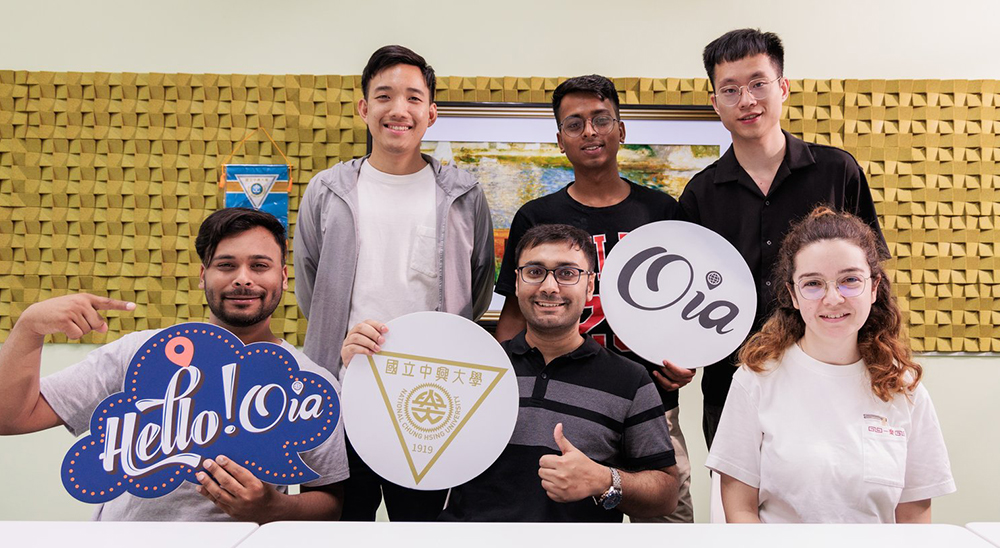
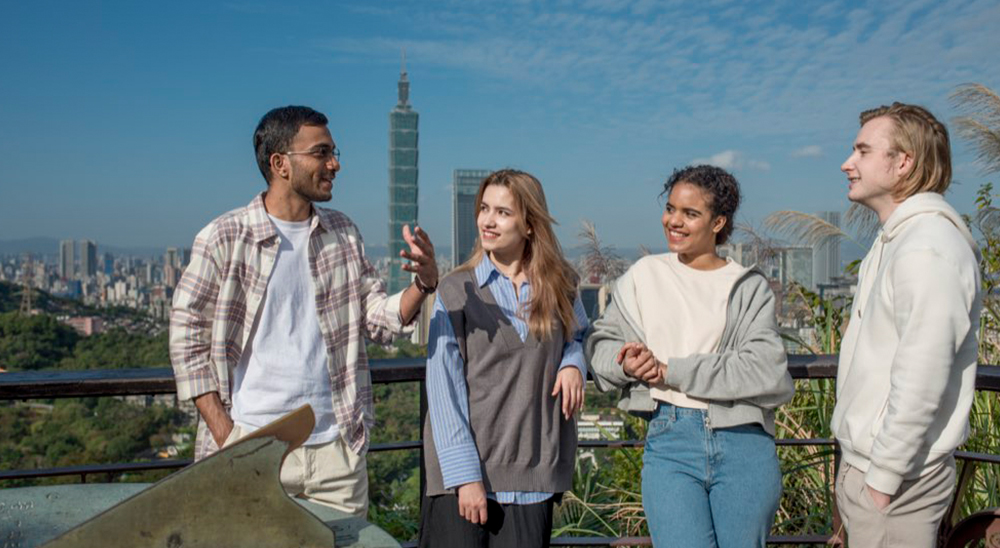
Anand Chauhan and fellow Nt'l Chung Hsing U (NCHU) international students. NCHU is major comprehensive university in Central Taiwan. Photo: FICHET
The global recognition of Taiwanese literature, exemplified by the International Booker Prize win of Taiwan Travelogue, has added tremendous momentum to the international Taiwan Studies movement. Taiwanese academic institutions are spearheading this movement, providing robust academic environments where literature, history, and the social sciences intersect. A prime example of this academic incubation is National Chung Hsing University (NCHU), which cultivated the literary talent of author Yang Shuang-zi. She earned her master's degree from the university's Graduate Institute of Taiwan Literature and Transnational Culture and later served as its "Chuan-liu Taiwan Literature Writer-in-Residence" in 2021, where she led workshops and seminars, cultivating the next generation of creative writers and demonstrating the university's role as a vital incubator for world-class literary achievements.
To institutionalize these academic pursuits, universities are establishing specialized departments that preserve and analyze the island's literary history. For instance, National Cheng Kung University (NCKU) established the first Department of Taiwanese Literature in a public university in 2002. Offering complete BA, MA, and PhD curricula, the department is housed in Tainan's historic military garrison hospital, aligning academic study with tangible historical preservation. In a similar vein, National Taiwan University (NTU) administers the Graduate Institute of Taiwan Literature, offering cross-disciplinary research that integrates history, literature, and social sciences. The institution also runs a university-wide Taiwan Studies Program for undergraduate students, while world-renowned institutions like the School of Oriental and African Studies (SOAS) in London and Heidelberg University host separate, parallel Taiwan Studies initiatives that collectively promote Taiwanese culture and history internationally.
This integration of humanities with global outreach is also seen in hosting international delegations. In March 2026, National Chengchi University (NCCU) welcomed a delegation from the Fulbright International Education Administrators (IEA) program, which included representatives from U.S. institutions like San Francisco State University and the University of San Diego. During this exchange, representatives highlighted how they integrate STEM with social policy and local community engagement to maximize the social impact of scientific research.
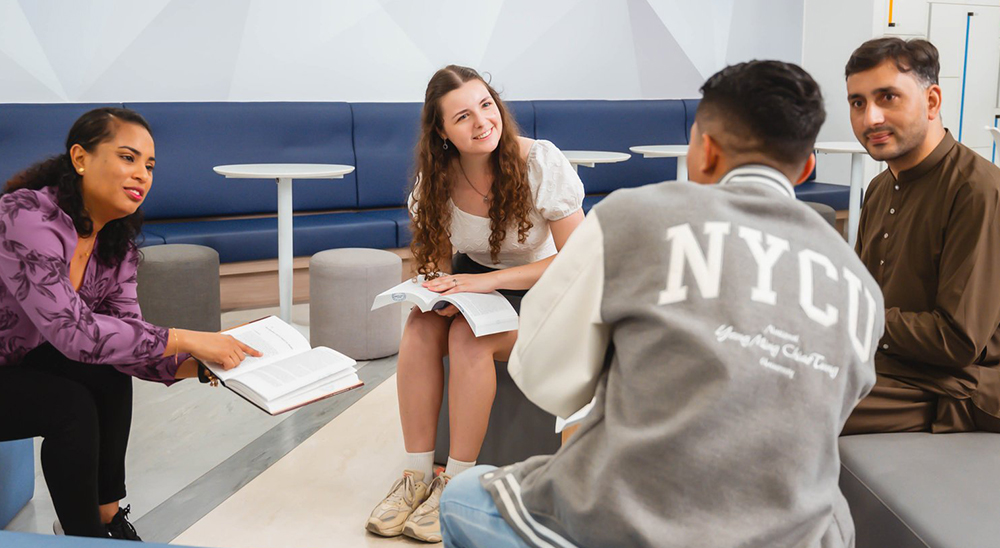
Nt'l Yang Ming Chiao Tung U (NYCU), a traditionally engineering school, also offers strong programs in liberal arts and humanities. Photo: FICHET
The international success of Taiwan Travelogue underscores the essential role of translators as cultural guides who foster cross-border empathy and understanding. Rather than treating translation as a dry academic theory, Taiwanese universities are designing programs that prepare language professionals for practical publishing and global communication. For example, Tamkang University (TKU) developed a specialized Study Program in Foreign Language Translation under the College of Foreign Languages and Literatures, equipping students with professional multi-lingual translation and interpretation skills that prepare them for the global publishing and media industries.
Other institutions are reorganizing their academic structures to foster interdisciplinary language skills. In the 2024 academic year, Fo Guang University (FGU) created the integrated Department of Language and Literature, merging its language departments to combine Chinese Literature and Applied Studies with Foreign Languages and Literatures. This innovative department combines traditional literary studies, creative publishing, and multi-lingual language training, preparing students for cross-cultural communication roles. Meanwhile, National Yang Ming Chiao Tung University (NYCU) conducts advanced cross-disciplinary research through its Graduate Institute of Foreign Literatures and Linguistics. The institute focuses on literary criticism, language structures, and transnational cultural theory, training scholars to examine how literature and ideas travel across linguistic and political boundaries.
Guardians of Heritage, Pioneers of AI
Cultural Conservation and Liberal Arts Innovation
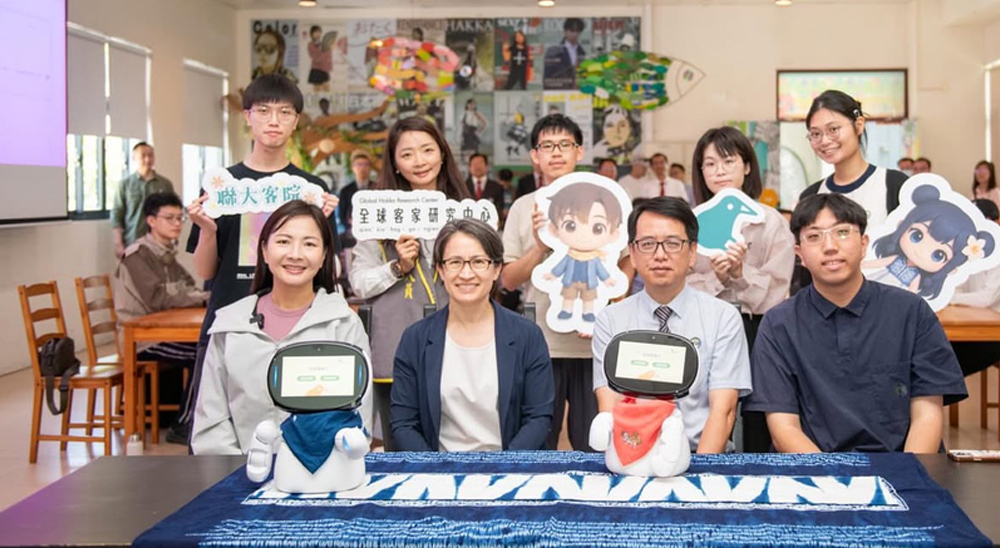
Nt'l United U (NUU) presented research results in AI-powered Hakka systems in VP Hsiao Bi-kim's May visit. Photo: NUU
Taiwan's unique cultural landscape is actively preserved and promoted through specialized university programs focusing on Hakka, Indigenous, and local heritage. In the field of tangible art and artifact preservation, Cheng Shiu University (CSU) operates the Conservation and Research Center for Cultural Heritage. The center is a leader in the scientific restoration and preservation of oil paintings, historical archives, rare books, and cultural artifacts, combining chemical analysis with artistic techniques. By providing critical technical expertise and hands-on training, the center keeps Taiwan's tangible history alive for future generations.
In addition to physical restoration, universities focus on preserving language, oral histories, and community communication. For instance, National United University (NUU) houses both the Institute of Hakka Language and Communication and the Department of Taiwan Languages and Communication. Located in a region rich in Hakka culture, the university trains students to use media and communication tools to document local heritage and share Hakka language and traditions with a global audience. For Indigenous heritage, National Dong Hwa University (NDHU) features the College of Indigenous Studies, which includes the Department of Indigenous Languages and Communication and the Graduate Institute of Ethnic Relations and Cultures. The college facilitates international academic exchanges and research collaborations with global Indigenous communities, ensuring that Taiwan's indigenous voices contribute to international discourses on cultural conservation.
Modern humanities in Taiwan are evolving by integrating traditional liberal arts values with digital technologies, preparing students for cross-disciplinary global challenges. Tunghai University (THU) promotes its International Liberal Arts Honors Program. Emphasizing small-class teaching, critical thinking, mentor guidance, and a global outlook, this program is modeled on residential college systems to cultivate well-rounded graduates capable of navigating complex socio-technical environments. Simultaneously, universities are embracing artificial intelligence to innovate language and humanities education. Feng Chia University (FCU) pioneered the integration of generative AI tools directly into its Chinese and Foreign Languages curricula under the College of Humanities and Social Sciences. This initiative trains students to use AI writing and digital content creation tools alongside traditional literary analysis, preparing them for the demands of the modern digital economy.
Silicon and Synergy
Building the Transnational Semiconductor Mega-Campus
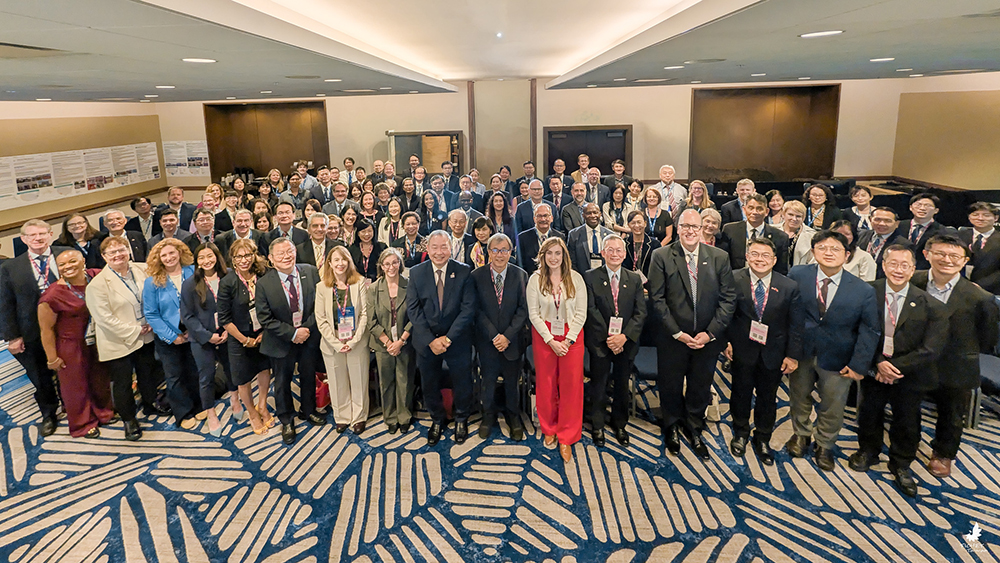
2026 U.S.-Taiwan Semiconductor Higher Education Networking Event. Photo: FICHET
On May 27, 2026, the 2026 U.S.–Taiwan Semiconductor Higher Education Networking event in Orlando, Florida marked a major milestone in educational diplomacy when FICHET and the American Association of State Colleges and Universities (AASCU) signed a Letter of Intent to launch the U.S.–Taiwan Semiconductor Education Alliance. Established under the U.S.–Taiwan Education Initiative framework, this alliance builds an institutionalized platform for student exchanges, joint research collaborations, and industry internships. By conceptualizing Taiwan's entire academic and industrial landscape as a unified semiconductor "mega-campus", the alliance enables international students and scholars to transition seamlessly between classroom theory and cleanroom practice.
Taiwan's universities are playing a key role in this alliance by designing specialized bilingual curricula and industry-academic pipelines. In terms of global program deployment, National Taiwan University of Science and Technology (NTUST, or Taiwan Tech) exported its Silicon Photonics bootcamp directly to the Czech Technical University in Prague, demonstrating Taiwan's ability to share its technical expertise internationally. Other institutions focus on creating highly customized pipelines to support the global expansion of Taiwan's semiconductor industry. National Taipei University of Technology (NTUT, or Taipei Tech) co-created the "Bachelor's Program in Semiconductor Process and Equipment" with TSMC, establishing specialized cohorts to train technical talent for overseas fabrication plants.
In southern Taiwan, National Sun Yat-sen University (NSYSU) drives the expansion of the Southern Semiconductor S-Corridor. As a designated Benchmark Bilingual University, the university provides extensive English-medium instruction and hosts world-class exchange laboratories in photonics and materials science, preparing a global workforce for high-tech industries. Additionally, vocational institutions like Ming Chi University of Technology (MCUT) established the "Bachelor's Program in Semiconductor Materials and Fabrication". The curriculum combines hands-on vocational training in cleanroom environments with industry partnerships stretching to San Jose, California, giving students direct pathways to global career opportunities in the semiconductor supply chain.
Linguistic Gateways
Advancing Mandarin Education and Cultural Soft Power
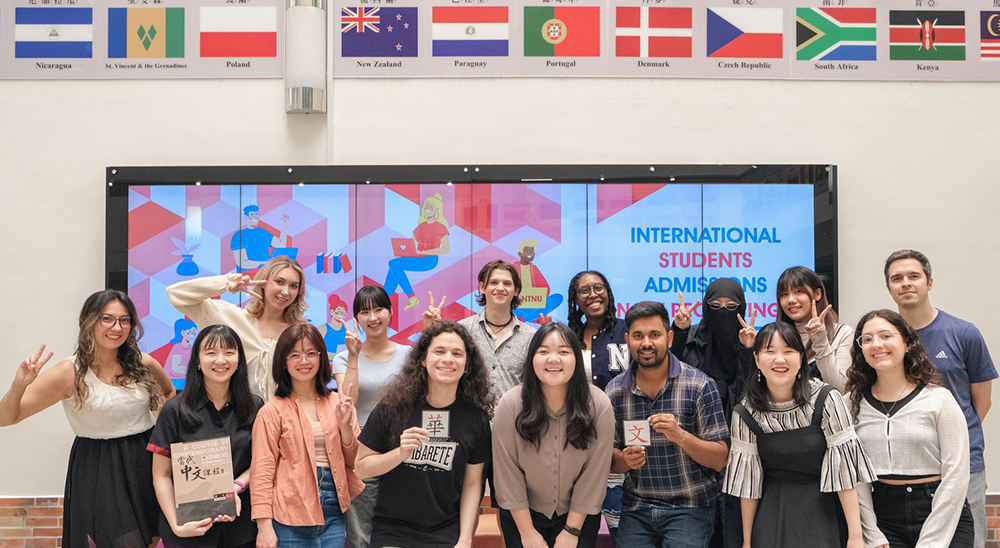
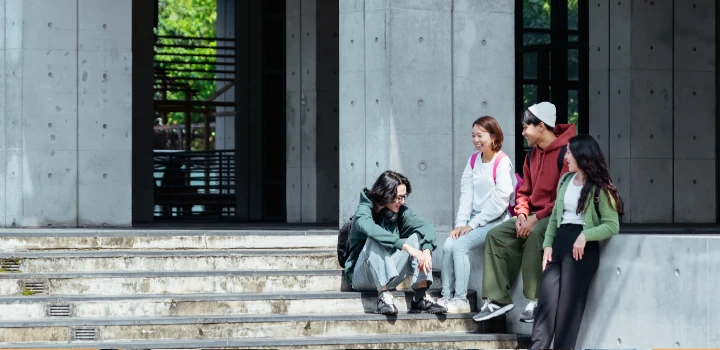
Pintu Kumar and Nt'l Taiwan Normal U (NTNU) international students. NTNU, famed for its liberal arts education, also runs one of Taiwan's top Mandarin training center. Photo: FICHET
Language acquisition is a crucial bridge for Taiwan's higher education internationalization, supported by the Ministry of Education's Mandarin Education 2030 policy. At the Chinese Language Teachers Association (CLTA) 2026 Annual Conference in Rhode Island, FICHET, for the first time, participated as an exhibitor to promote the Taiwan Mandarin Educational Resources Center and showcase high-quality digital resources, demonstrating how Taiwan integrates contemporary trends into language learning. Key institutions are leading the implementation of these modern language programs. For example, National Central University (NCU), led by Professor Tsai Tzong-Han and his team, developed the "AI Mandarin Partner," an AI-driven digital tool designed to assist Mandarin language teachers in material design and personalized learning by automatically generating readings that match a student's proficiency level.
Undergirding these innovations is the institutional infrastructure built over seven decades by National Taiwan Normal University's (NTNU) Mandarin Training Center (MTC). Founded in 1956 and widely recognized as the oldest and largest Mandarin-as-a-second-language center in the world, the MTC enrolls roughly 1,700 international students each term from more than 80 countries, providing the human-scale platform through which Taiwan's Mandarin education infrastructure reaches global learners. To connect language acquisition with technical career paths, Fulbright Taiwan, with support from Taiwan's Ministry of Education, developed the Semiconductor Mandarin teaching materials in collaboration with National Tsing Hua University's (NTHU) Chinese Language Center, helping international students master the specialized technical terminology they need to transition smoothly into Taiwan's high-tech work environments. These efforts are further supported by national scholarship programs, including the Huayu BEST Program and the Huayu Enrichment Scholarship, which continue to attract global talents to study and research in Taiwan.
Welcoming Global Talent
Easing Residency Regulations and Expanding Internship Pathways
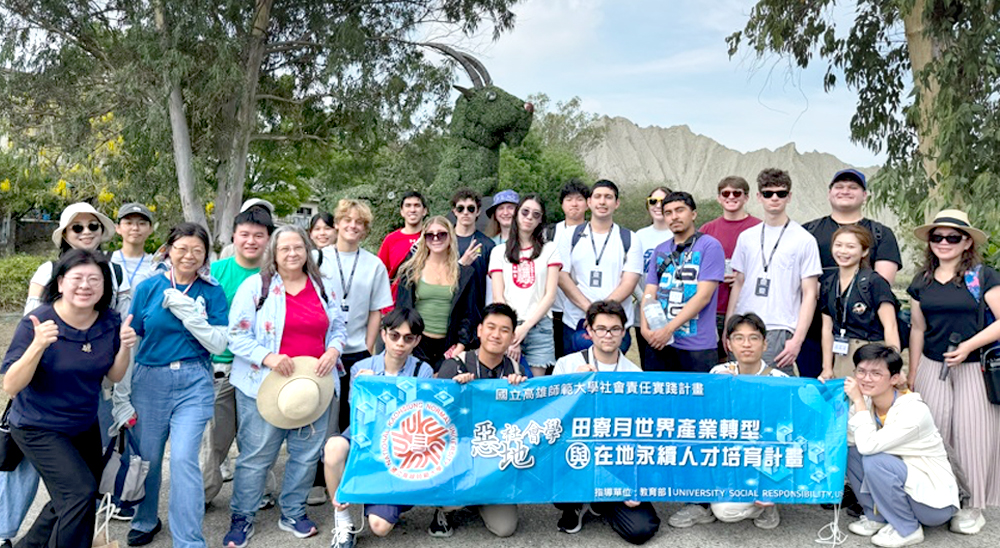
Nt'l Kaohsiung Normal U (NKNU) is driving global talent retention and mobility by connecting students to local opportunities. Pictured here is a short-term USR project with Embry-Riddle Aeronautical University. Photo: NKNU
Taiwan has introduced proactive national policies and internship programs to lower barriers for international students and encourage them to build careers on the island. In January 2026, the National Development Council (NDC) enacted new immigration measures allowing international graduates of Taiwanese universities to work in Taiwan without a work permit for two years after graduation. This policy removes a major bureaucratic hurdle, giving graduates ample time to secure long-term employment. Furthermore, the policy fast-tracks permanent residency for degree holders, deducting one, two, or three years from the standard five-year residency requirement for Bachelor's, Master's, and Doctorate degrees, respectively.
To provide hands-on experience before graduation, the Taiwan Experience Education Program (TEEP) and the International Internship Pilot Program (IIPP) place international students directly in university labs, research centers, and corporate environments. Taiwanese universities host highly innovative TEEP programs. For example, I-Shou University (ISU) coordinates the TEEP program "I-Voices: Global Resonance Project" (running from June 1 to September 30, 2026), which trains international interns in digital media, podcasting, and generative AI content creation, supported by the university's NVIDIA collaboration. Meanwhile, National Kaohsiung Normal University (NKNU) hosts the TEEP program "Youth Empowerment x Global AI Innovation", integrating AI with educational technology to train students for Southern Taiwan's tech education sector. Additionally, the University of Taipei (UTaipei) is a partner institution participating in the national IIPP, offering research internships focused on Earth and Life Sciences, sustainable development, and environmental education under Associate Prof. Sung-Ta Liu.
Furthermore, researchers interested in short-term projects can take advantage of the Ministry of Education's Short-term Research Award (STRA), which requires applications to arrive at the host institution by September 30. This award provides monthly stipends to doctoral candidates and post-doctoral researchers, enabling them to conduct collaborative research at Taiwanese universities and build global academic partnerships.
FICHET & Study in Taiwan
Driving Global Impact: FICHET's International Outreach
The Foundation for International Cooperation in Higher Education of Taiwan (FICHET) continues to play a central role in Taiwan's educational diplomacy by organizing delegations and representing Taiwan's higher education system at major international conferences. At the NAFSA 2026 Annual Conference & Expo in Orlando, Florida, FICHET organized the "Study in Taiwan" Pavilion, which adopted a "Technology Hub" visual concept to highlight the close integration of Taiwan's higher education with advanced industries. The pavilion was opened with a ribbon-cutting ceremony by the Minister of Education and the Managing Director of the American Institute in Taiwan (AIT) Washington Office. FICHET also hosted the Taiwan Night Reception, which brought together nearly 150 representatives from global partner institutions, the U.S. Department of State, and Representative Amb. Alexander Tah-Ray Yui to strengthen academic relationships and discuss new avenues for cooperation.
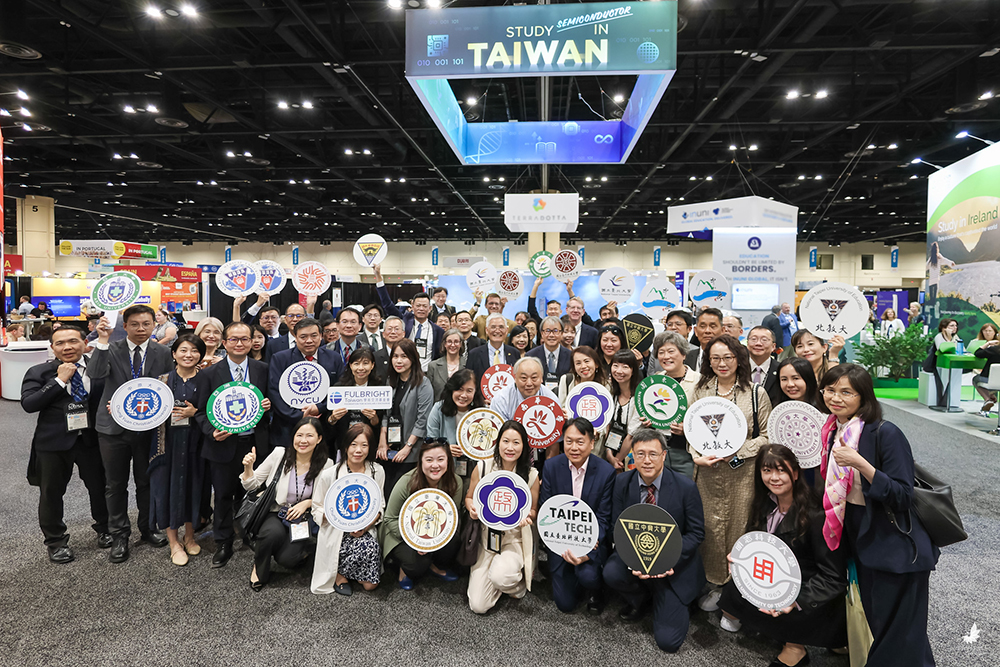
The "Study in Taiwan" Pavilion at NAFSA 2026 Annual Conference & Expo. Photo: FICHET
Additionally, FICHET's participation as a first-time exhibitor at the Chinese Language Teachers Association (CLTA) 2026 Annual Conference in Rhode Island introduced Taiwan's digital Mandarin teaching assets, promoting the Taiwan Mandarin Educational Resources Center and its digital materials. Through this exhibition, the delegation collected feedback from American K-12 and university teachers to guide the future development of teaching resources, deepening Taiwan-U.S. educational diplomacy.
Q3 2026 Events Preview
Looking ahead, FICHET is gearing up for a packed schedule of international engagements to keep Taiwan at the absolute center of global educational exchange. Mark your calendars for these upcoming Q3 events:
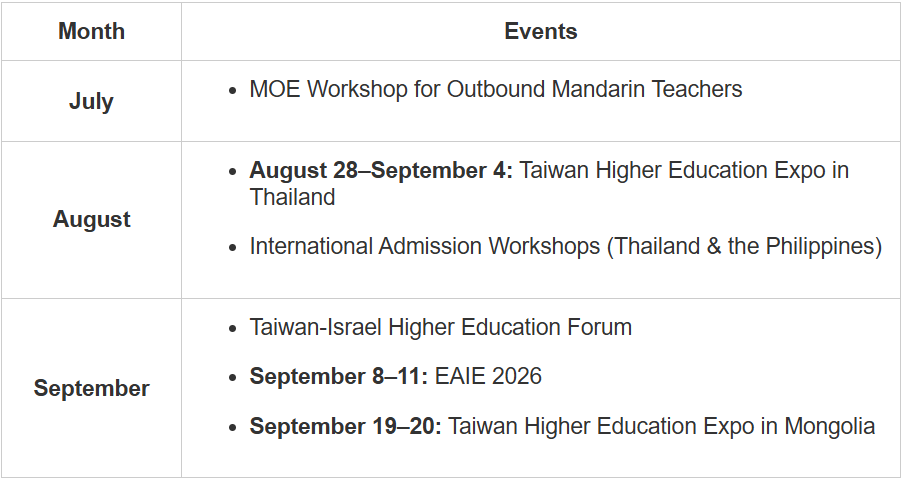
As the summer season approaches, FICHET wishes all our international students, faculty, and global partner institutions a productive and refreshing summer break. Whether you are conducting research in a lab, participating in language courses, or preparing for the upcoming academic year, we are proud to support your academic journey. We invite your feedback, suggestions, and inquiries about study opportunities in Taiwan. Please feel free to reach out to us at fichet@fichet.org.tw.
From Our Students
“The professors’ effective teaching methods in note-taking and accurate information conveyance during interpreting have been particularly beneficial.”
—Sayaka Hayakawa (Japan 🇯🇵)
Department of Translation and Interpretion, Wenzao Ursuline University of Languages
“The academic seminars, workshops, and faculty guidance have supported my growth beyond the boundaries of the traditional classroom.”
—Upama Mutsuddy (Bangladesh 🇧🇩)
Department of Buddhist Studies, Fo Guang University



![[FICHET Higher Ed in Taiwan Newsletter] From Ink to Silicon: Bridging Cultures and Technologies in Taiwan's Higher Education](/album/news/fe5b0680447bb00e1f91359cw1200.webp)
![[FICHET Higher Ed in Taiwan Newsletter] From Ink to Silicon: Bridging Cultures and Technologies in Taiwan's Higher Education](/album/news/fe5b0680447bb00e1f91359cw500.webp)
![[Forward News] 𝐈𝐍𝐓𝐄𝐍𝐒𝐄 𝐏𝐫𝐨𝐠𝐫𝐚𝐦 (International Industrial Talents Education Special Program)](/album/files/97160f98980cabe554243950+cw500h280.webp)
![[Forward News] MOE Short Term Research Award](/album/news/6697338f86479+cw500h280.webp)
![[Forward News] NYCU & TSMC Summer Program](/album/files/d2b67aa971797255f4dc5022+cw500h280.webp)
![[Forward News] MOE touts foreign talent program’s achievements](/album/files/ec825a330283c9dcf5b684fb+cw500h280.webp)
![[Forward News] NYCU Publishes PlayChip, Bringing Taiwan’s AI-Semiconductor Education Model to the World](/album/files/eceaad570229238f212d3108+cw500h280.webp)
![[Forward News] Taiwan launches one-stop banking services for foreign residents](/album/files/e2b92dd1e22f9ad3926466ac+cw500h280.webp)
![[Forward News] PhD journey from Tanzania to Taiwan](/album/files/8b758c93fa226c2dbd8e1a4b+cw500h280.webp)
![[Forward News] Taiwan, US join forces on semiconductor education](/album/files/8a9b9f1a3365ac17a2faa4dc+cw500h280.webp)
![[Forward News] 2026 Workshop for Translating Taiwan Literature](/album/files/49720c2fd4d81ed79fb4f303+cw500h280.webp)

