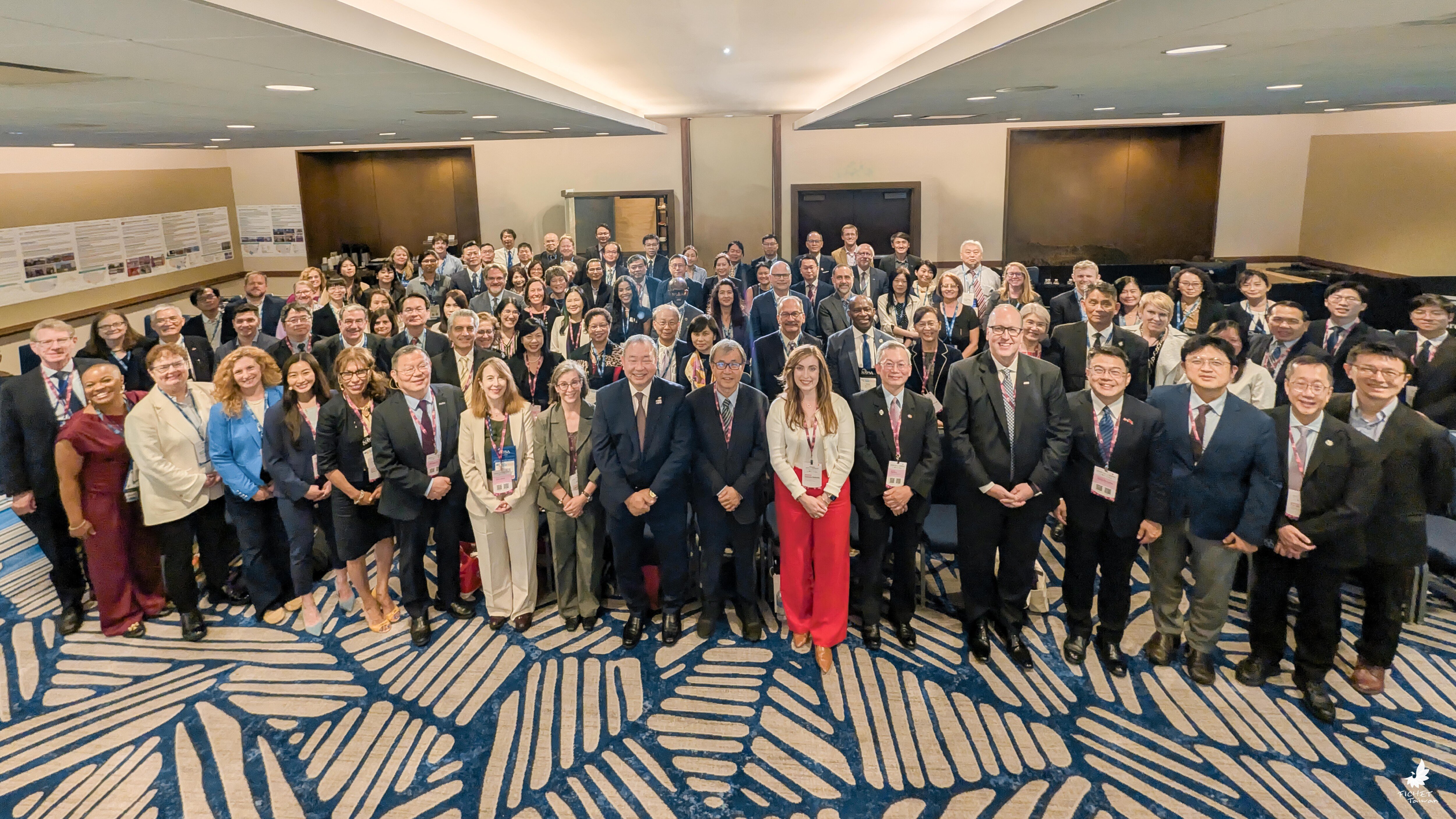
The “2026 U.S.–Taiwan Semiconductor Higher Education Networking Event” was jointly organized by the Ministry of Education, the American Institute in Taiwan, and the Foundation for International Cooperation in Higher Education of Taiwan (FICHET), and was held on May 27 in Orlando, United States. As an important platform under the U.S.–Taiwan Education Initiative framework, the event focuses on semiconductor talent development and international collaboration, with the aim of strengthening institutional partnerships and academic exchange between higher education institutions in Taiwan and the United States.
Led by Minister of Education Ying-Yao Cheng, the Taiwanese delegation comprised representatives from 21 universities, including presidents, vice presidents, and senior international affairs executives. The event also brought together representatives from 27 U.S. higher education institutions and attracted more than 100 participants to engage in discussions on semiconductor talent development and international academic collaboration.
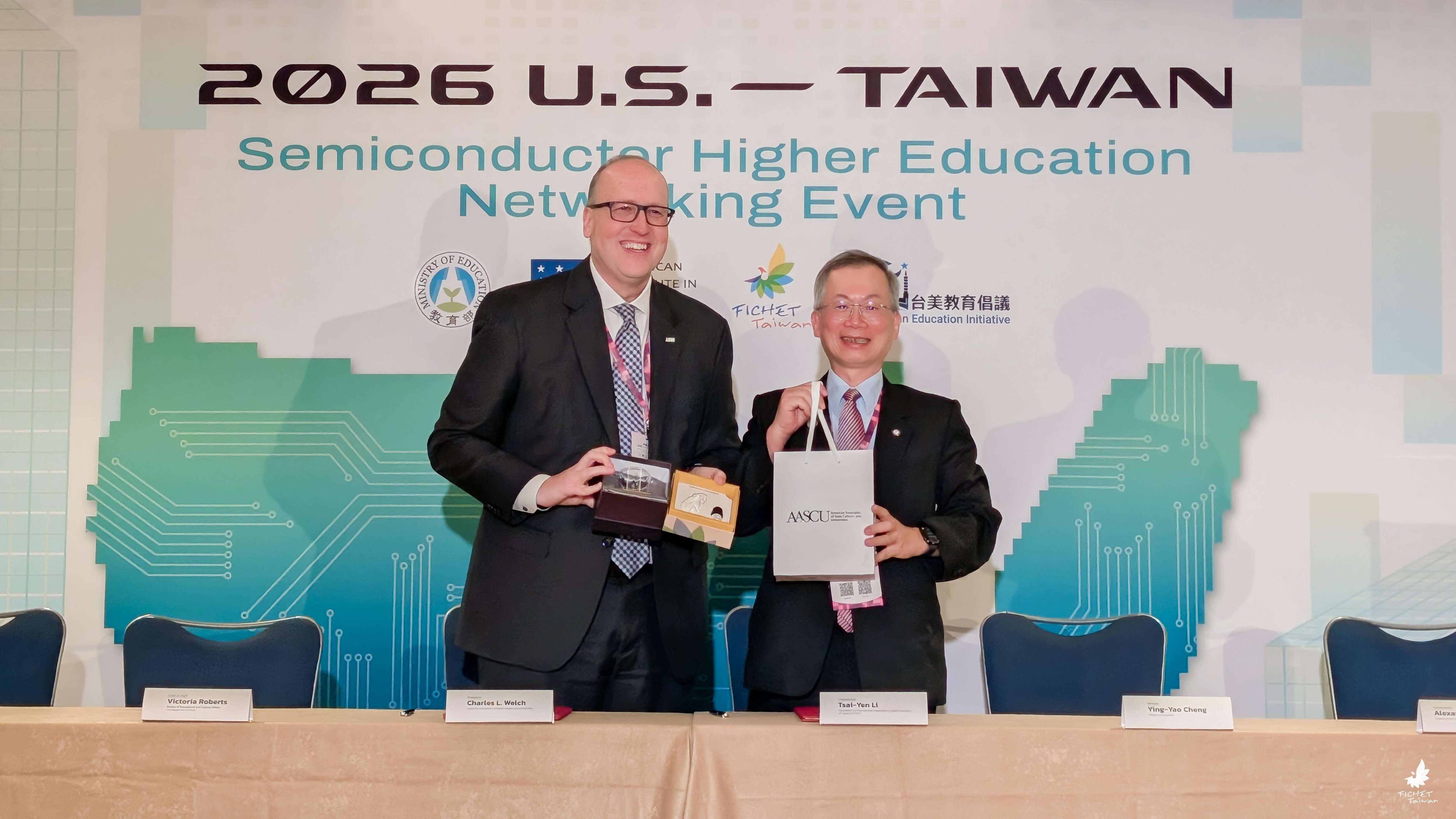
During the event, FICHET and the American Association of State Colleges and Universities (AASCU) formally signed a Letter of Intent to jointly launch the “U.S.–Taiwan Semiconductor Education Alliance.”
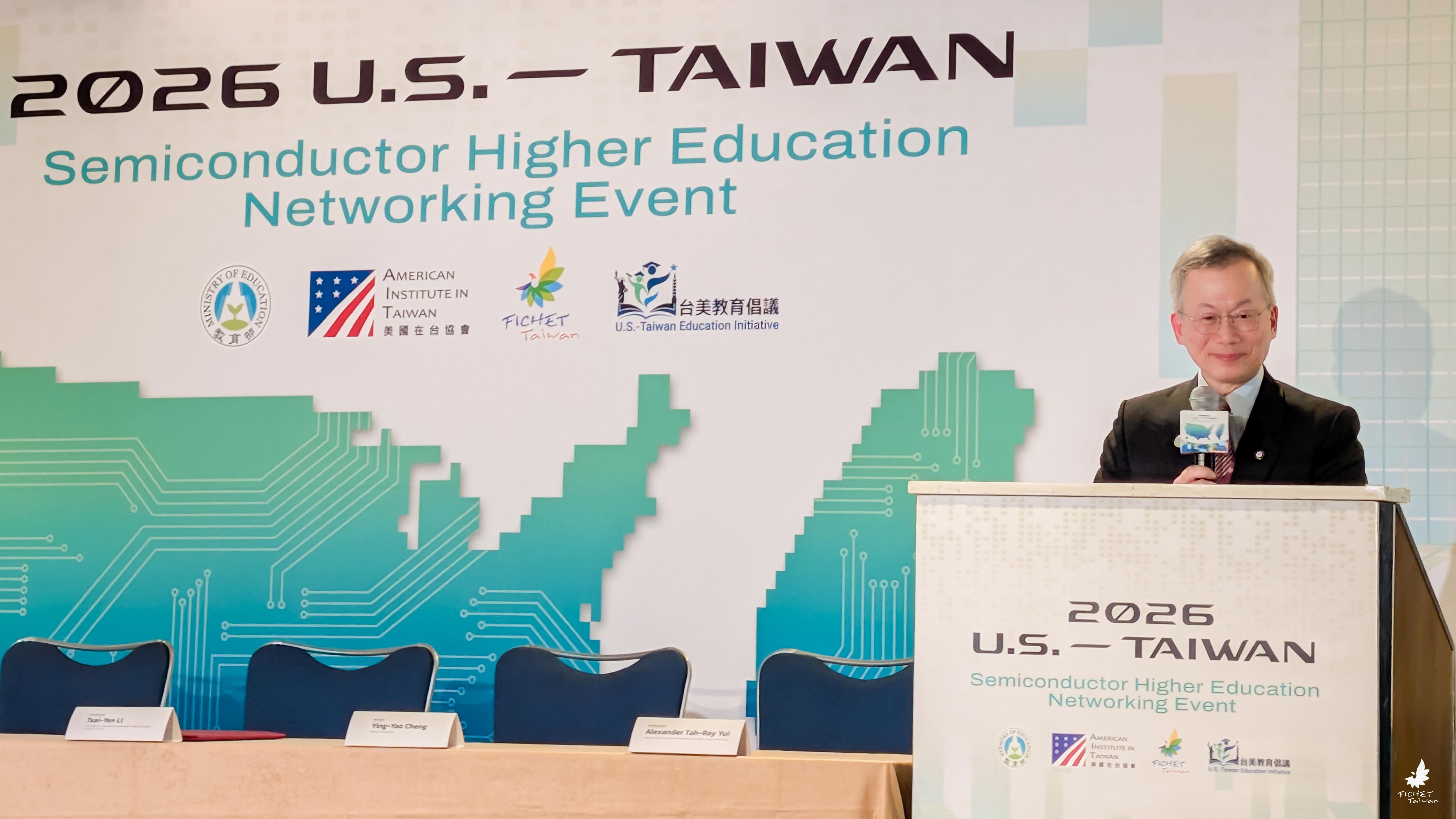
FICHET Chairperson Tsai-Yen Li noted that the signing of the LOI marks a step toward a long-term and institutionalized framework for cooperation between Taiwan and the United States. Through bilateral university partnerships, talent development, research collaboration, and educational exchange programs, the initiative aims to strengthen semiconductor talent pipelines and respond to global supply chain restructuring and the growing demand for advanced technology talent.
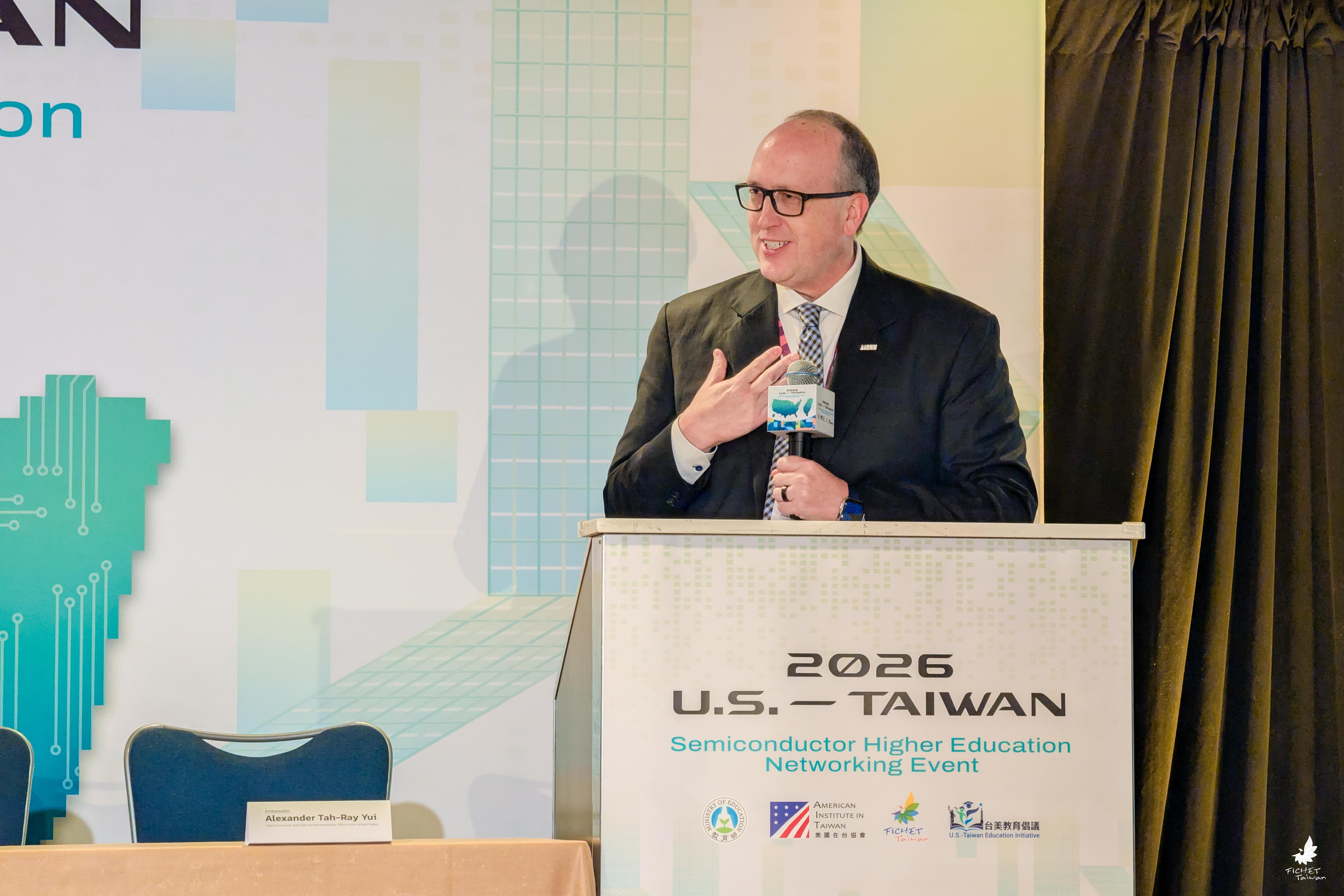
AASCU President Charles L. Welch also highlighted that this collaboration will foster practical and mutually beneficial partnerships while promoting more diverse models of student exchange and international academic collaboration.
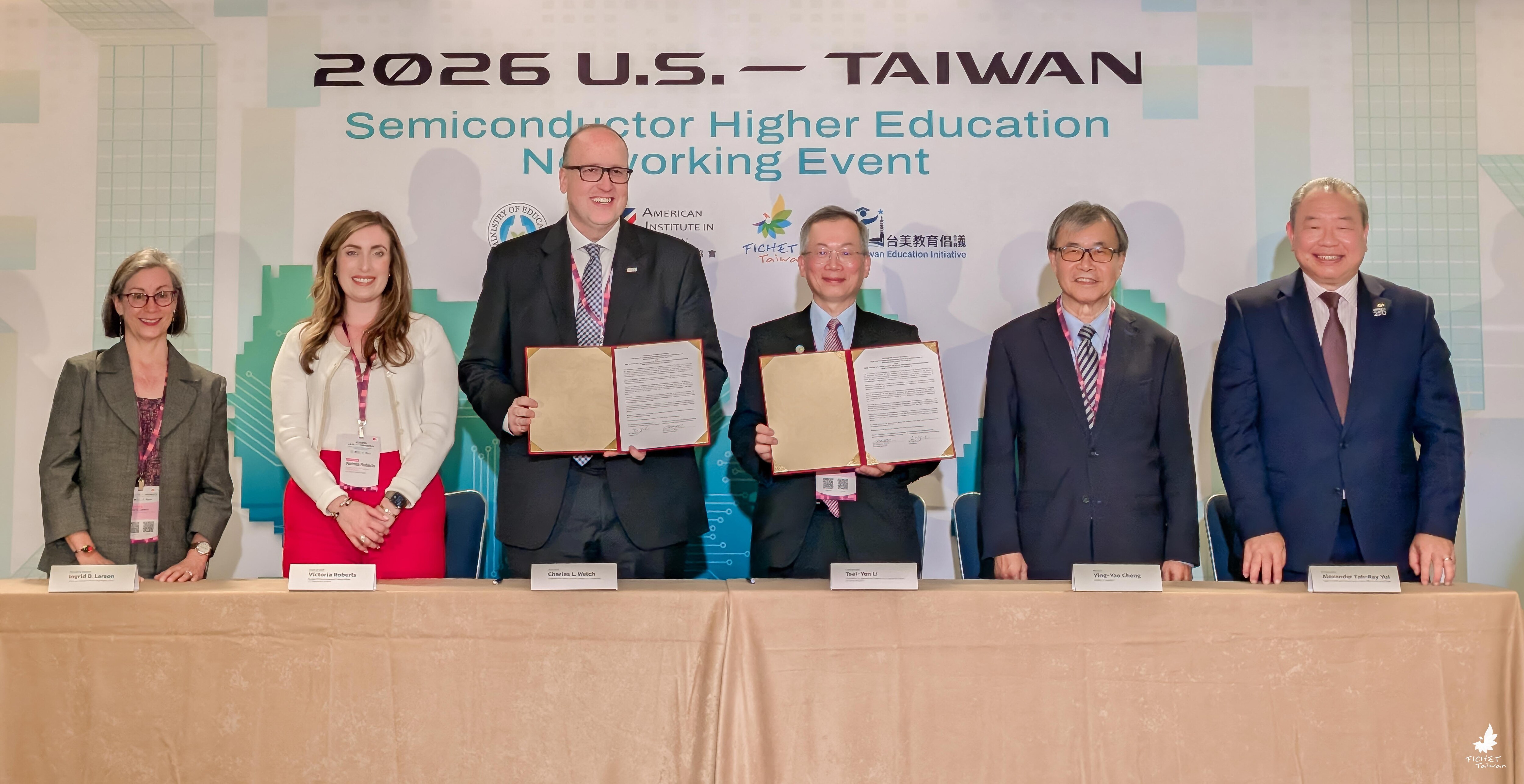
In addition to Minister Cheng, the event also invited Ambassador Alexander Tah-Ray Yui of the Taipei Economic and Cultural Representative Office in the United States, Ingrid D. Larson, Managing Director of the American Institute in Taiwan Washington Office, and senior officials from the U.S. Department of State's Bureau of Educational and Cultural Affairs (ECA), to deliver opening remarks and witness the signing ceremony.
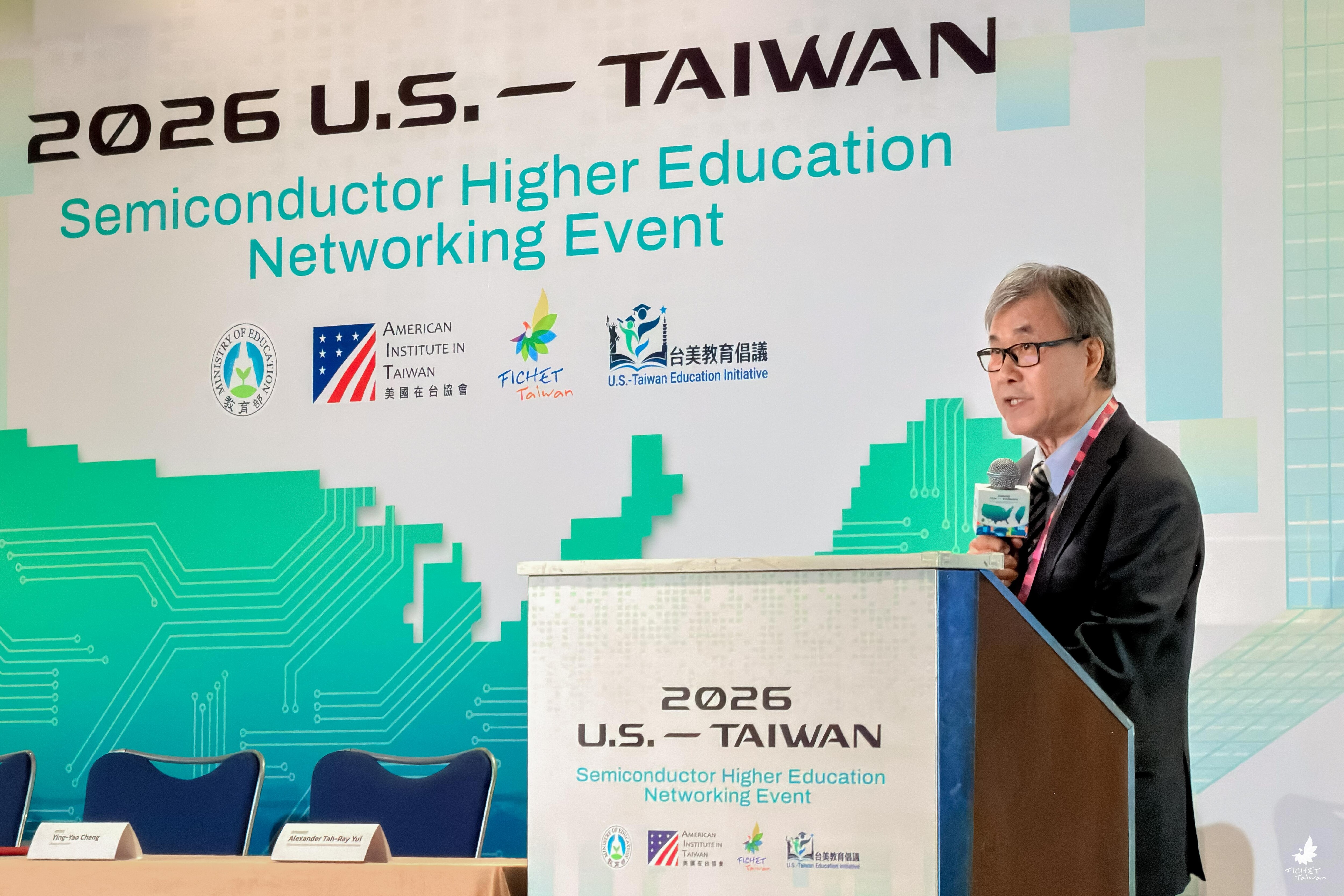
Minister Cheng stated that talent is the foundation of innovation, noting that Taiwan has established semiconductor colleges that integrate academic and industry resources to cultivate high-tech talent. He added that educational collaboration between Taiwan and the United States goes beyond talent development by strengthening connections and fostering a shared vision for the future.
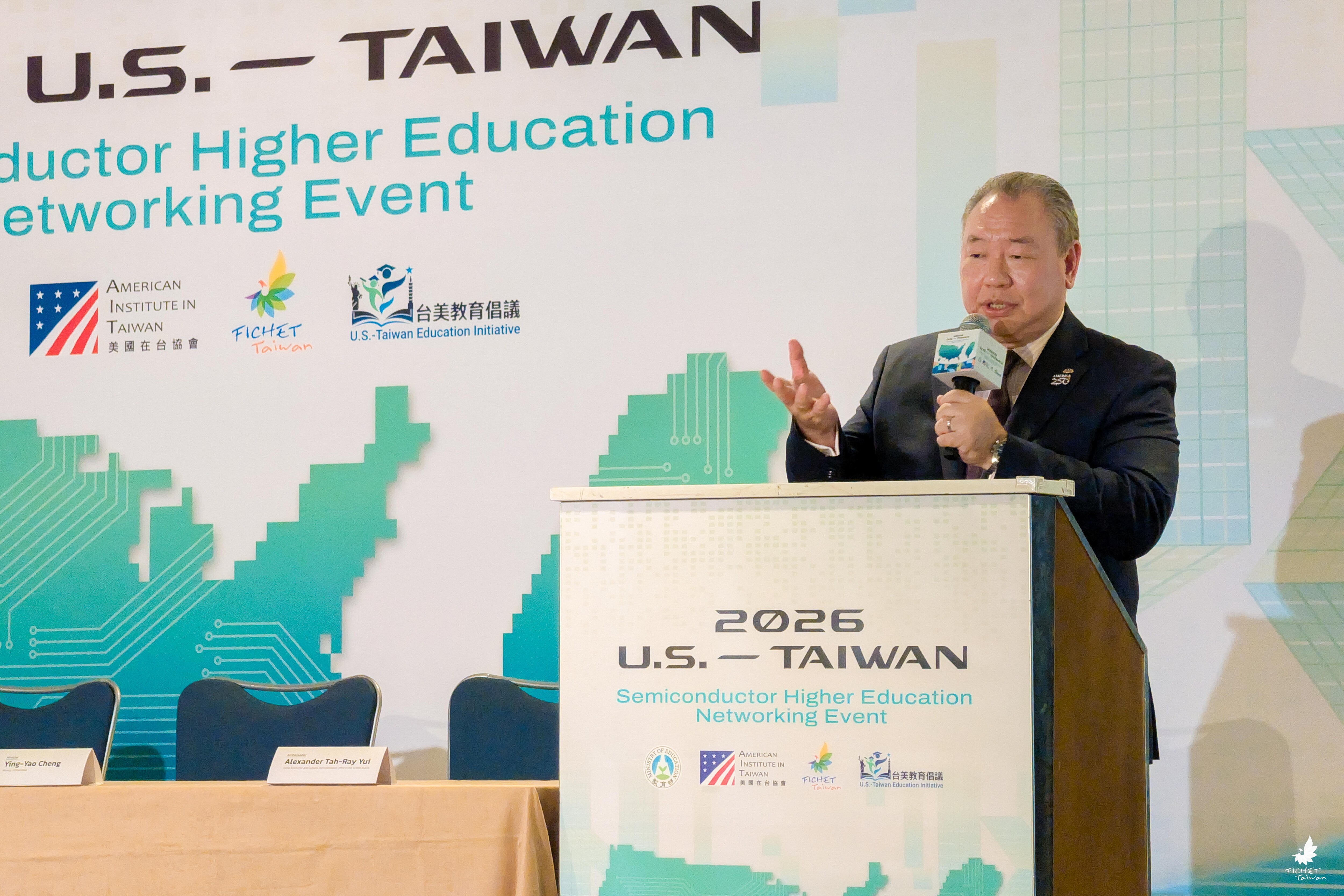
Ambassador Yui also emphasized that the relationship between Taiwan and the United States remains rock-solid, and semiconductor cooperation has become one of the most strategic and forward-looking areas of bilateral partnership. Taiwan’s role as a “silicon shield” also highlights the importance of maintaining peace and stability across the Taiwan Strait, as well as building trusted and resilient global supply chains.
The event also featured a panel discussion moderated by Channing Lee, Director of International Partnerships at the Special Competitive Studies Project, with panelists including President Chi-Hung Lin of National Yang Ming Chiao Tung University, President Cynthia Teniente-Matson of San Jose State University, and Reza Abdolvand, Chair of the Department of Electrical and Computer Engineering at the University of Central Florida. The discussion focused on current models and future prospects of U.S.–Taiwan semiconductor education collaboration, sharing practical experiences in dual-degree programs, industry–academia collaboration, short-term training, and various talent development schemes.
In addition, an on-site poster showcase featured 23 Taiwanese universities participating in the U.S.–Taiwan Semiconductor Education Alliance, highlighting semiconductor-related courses, research initiatives, industry-academia partnerships, and international collaboration achievements. The showcase provided U.S. institutions with insights into Taiwan’s highly integrated semiconductor education and industry ecosystem.
The launch of the networking event and the Semiconductor Education Alliance marks a significant milestone in U.S.–Taiwan higher education cooperation. By promoting student exchanges, short-term training programs, degree pathways, and internships, the alliance establishes a long-term platform for semiconductor talent development while strengthening academia-industry linkages and helping bridge the education-workforce gap. These efforts will further support the cultivation of advanced technology talent.



![[Forward News] 𝐈𝐍𝐓𝐄𝐍𝐒𝐄 𝐏𝐫𝐨𝐠𝐫𝐚𝐦 (International Industrial Talents Education Special Program)](/album/files/97160f98980cabe554243950+cw500h280.webp)
![[Forward News] MOE Short Term Research Award](/album/news/6697338f86479+cw500h280.webp)
![[Forward News] A Hungarian Engineer's Path to a Taiwan Gold Card](/assets/img/default_cover.webp)
![[Forward News] 86 Indonesian students awarded Taiwan scholarships](/album/files/71be470455154c4b68c55e0d+cw500h280.webp)
![[FICHET Higher Ed in Taiwan Newsletter] From Ink to Silicon: Bridging Cultures and Technologies in Taiwan's Higher Education](/album/news/fe5b0680447bb00e1f91359c+cw500h280.webp)
![[Forward News] NYCU & TSMC Summer Program](/album/files/d2b67aa971797255f4dc5022+cw500h280.webp)

